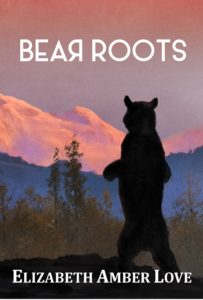
Bear Roots

No one knew volkolaks lived among them. Certainly not Ursula Applegate, a social media volunteer for an animal rights group trying to end the New Jersey bear hunt. She didn’t expect two other volunteers to become targets of hunters.
Buy at Gumroad or Amazon
The Tragedy that Moved Me to Write Bear Roots:
Ursula grew up as one of the few people of color in rural New Jersey. She inherited her family’s diner which is the foundation for connecting her to other people. As the social media volunteer for the Skylands Organization for Animal Rights (SOAR), Ursula becomes heavily invested in ending the New Jersey black bear hunt. She develops a close friendship with two other SOAR volunteers, Peter and Rona Medvedovich, twin siblings with a family secret.
Adriana Garcia is not only Ursula’s longtime girlfriend, she’s a reporter who will keep digging until she knows all the facts for a juicy story. She believes it’s her career ambition that drives her to wanting more information on the Medvedovich family, particular the twins’ aunt, Devora Zhukov, who is running for public office. Ursula thinks Adriana’s drive is basic jealousy over the time she spends with Rona and Peter.
When Peter’s life is in danger, Rona has no other choice than to trust Ursula with their secret. Their family is part of the volkolak race, a certain type of lycanthropy: people who shapeshift between being human and bears. Rona and Devora spend most of their daily lives as humans; but Peter embraces his unique wild side as the disabled bear who walks upright because of injured front paws. He’s known to the community as Walker the bear. Frankhurst hunter Travis Iver, who is also Ursula’s ex-boyfriend, wants Walker as his prize trophy.
Why Volkolaks?
The story behind Bear Roots is about the true story of Pedals the Bear. Pedals walked upright and fooled a lot of people, myself included, who first believed it was a person in a bear suit. Pedals’ front limbs were most likely injured by a collision with a car, according to statements in the newspapers. This bear became a common sight in the Denville and Rockaway areas of New Jersey and garnered national news attention. People grew accustomed to the sight of the bipedal bear and were happy to coexist. Pedals was killed during one of the bear hunts. His murderer’s name will not be released by the state.
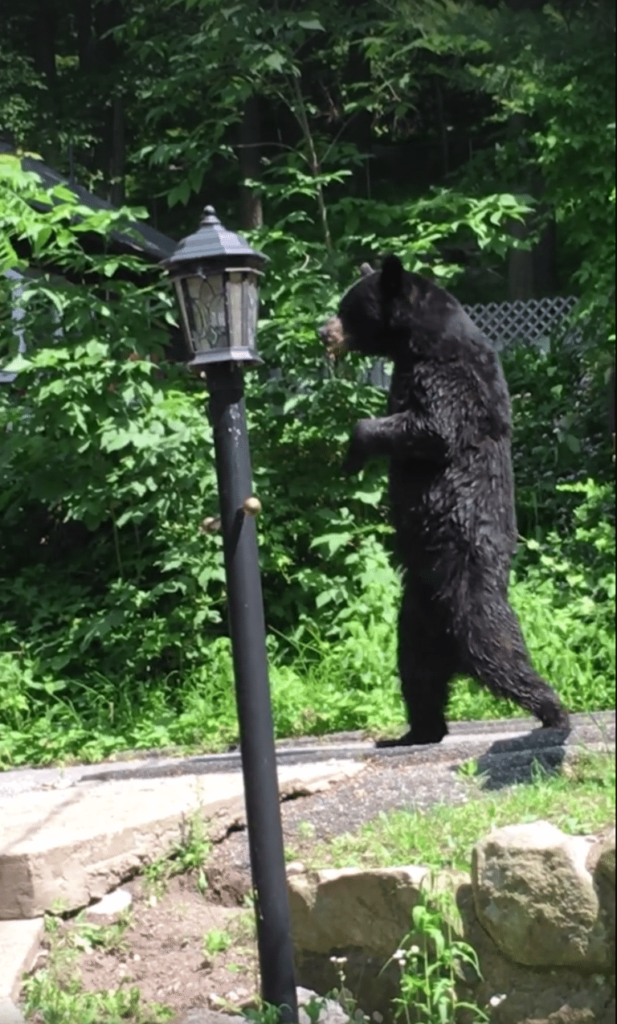
Source: NJ.com
Black bears are a small part of our life in New Jersey considering how terribly they and other wildlife are treated. Our “Garden State” may have farms, but they are often tied to large corporations and contribute to deforestation and noise pollution. I still prefer farms to cities, don’t get me wrong. It’s that when I think of the land that was for the animals, now they are forced out of their habitats because of “solar farms” and over-development of McMansions that somehow other people afford.
I love our bears. The first time I saw one, I was in sheer panic because I had an outdoor cat. My only experience with any kind of bear was hearing news stories about how they can crush anything unintentionally, because of their curiosity, like shark bites. Bears are curious. They also need food, water, and land. After that first sighting where I was terrified that my lovely cat and best friend at the time might accidentally be swiped or crushed by a paw four times larger than a man’s hand, I set out to learn about them. Sure, they’re majestic, but what are bears like?
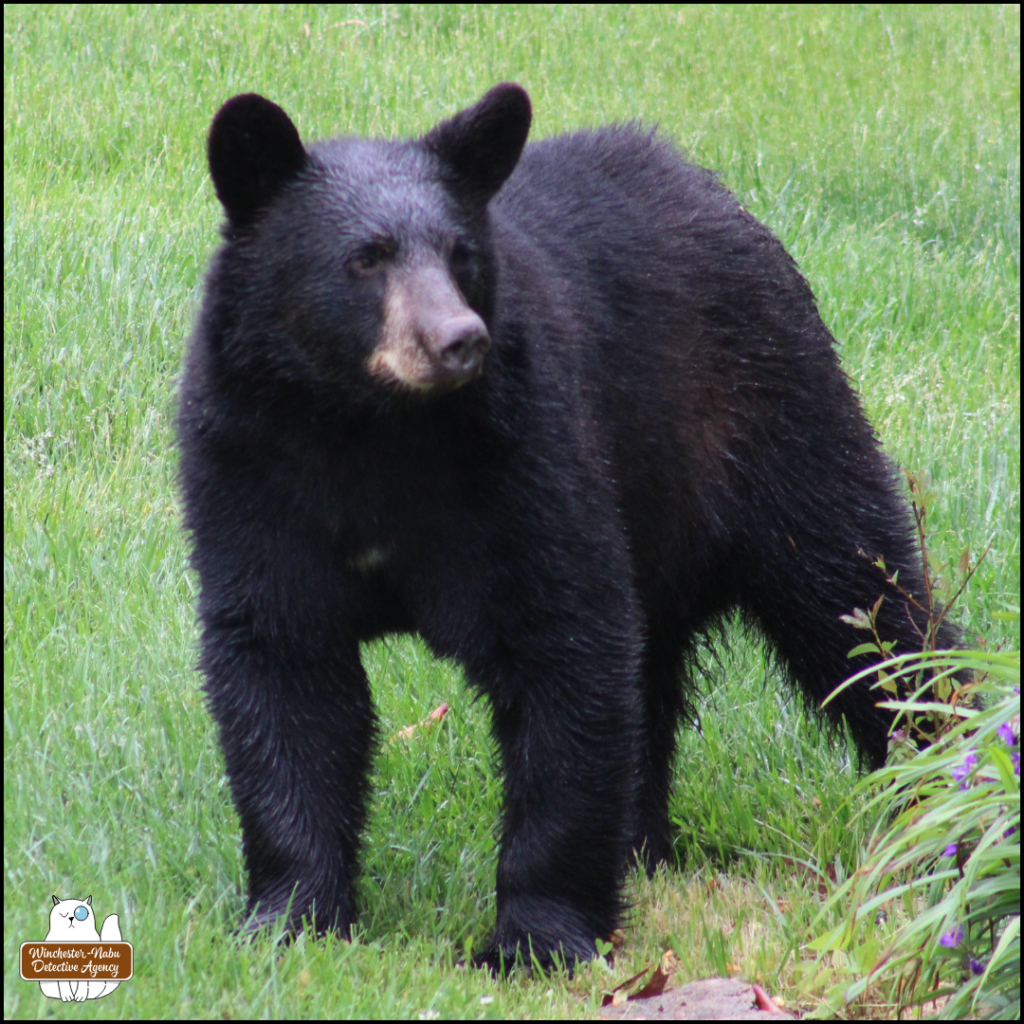
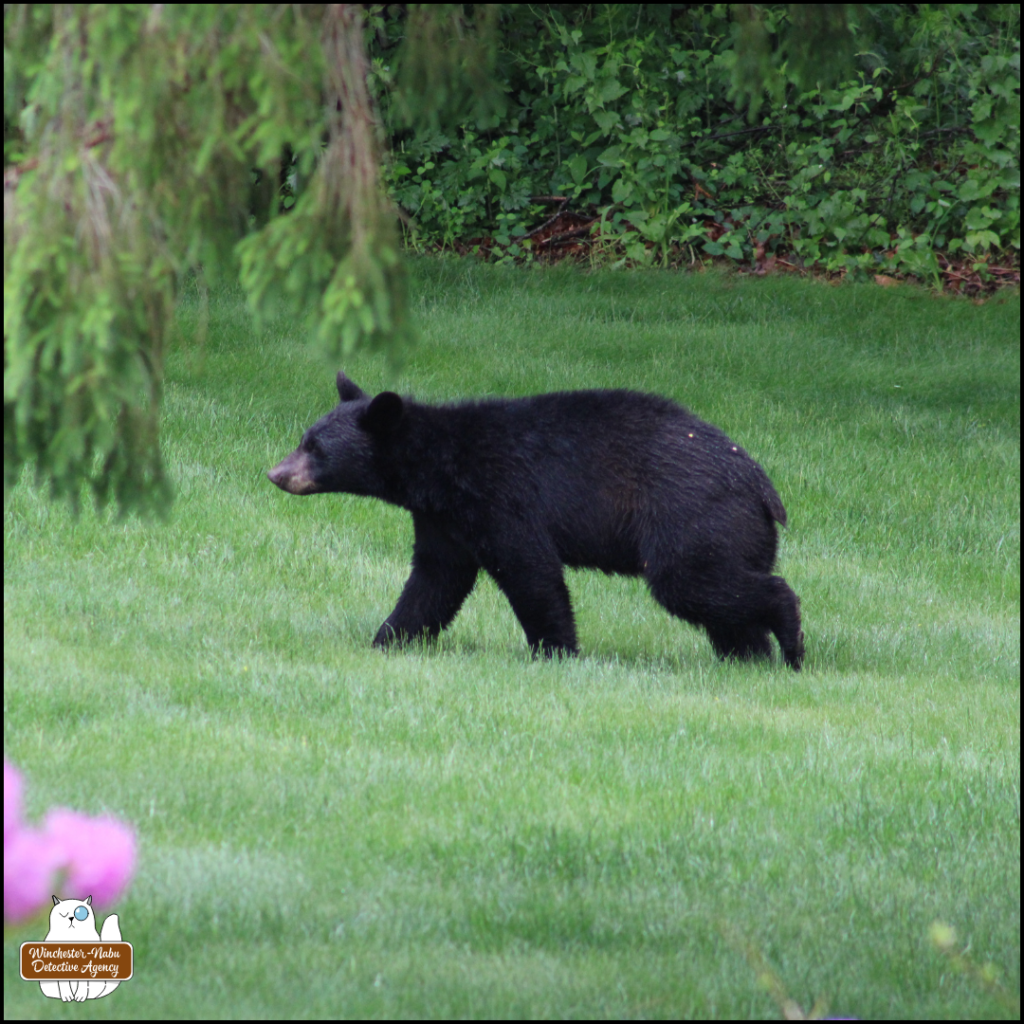
I learned all kinds of trivia about our black bears. They scientifically speaking don’t actually hibernate. They doze. They conserve all the energy possible. Mothers stay in dens with their cubs for up to two years. They can only get pregnant every two years. My own observations since that fateful fright showed me that they are not monsters. They love to play! They are family-oriented. They’re usually far more scared of humans and barking dogs than we are of them.
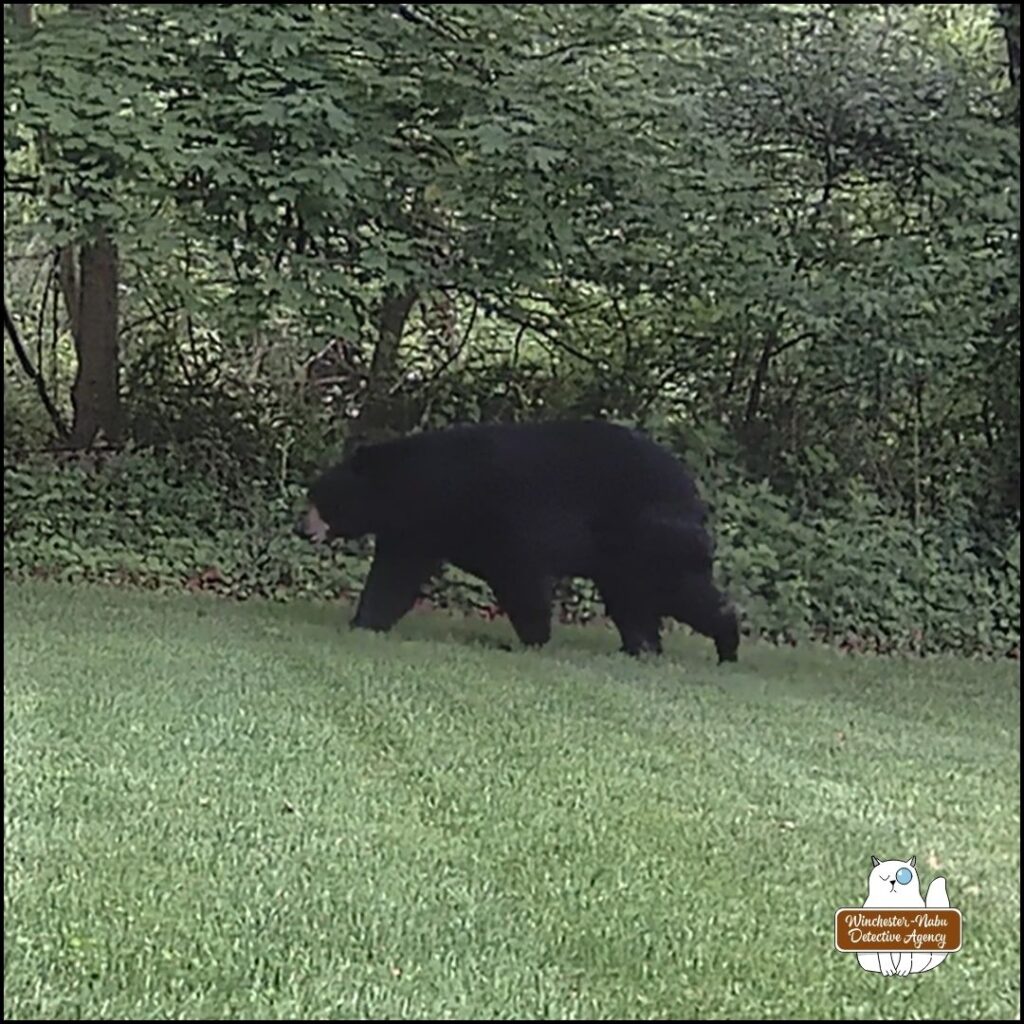
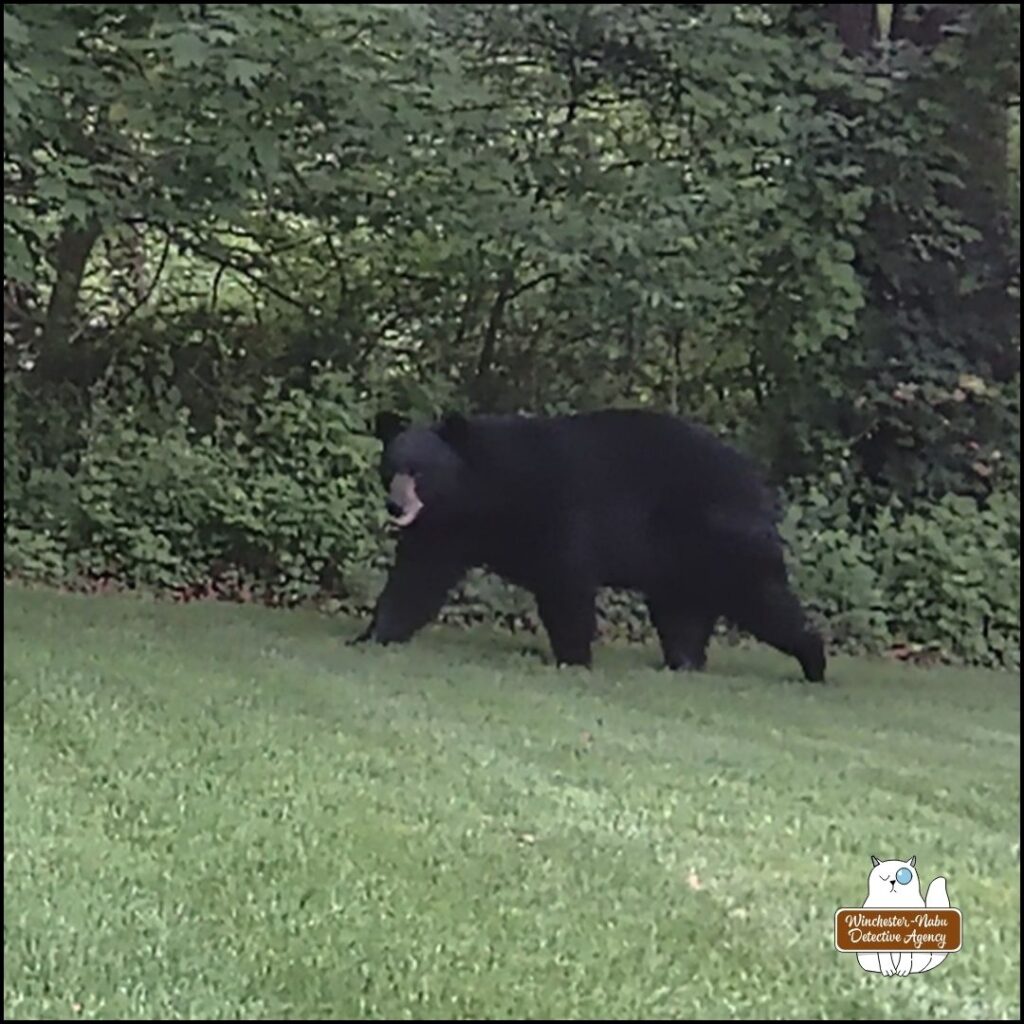
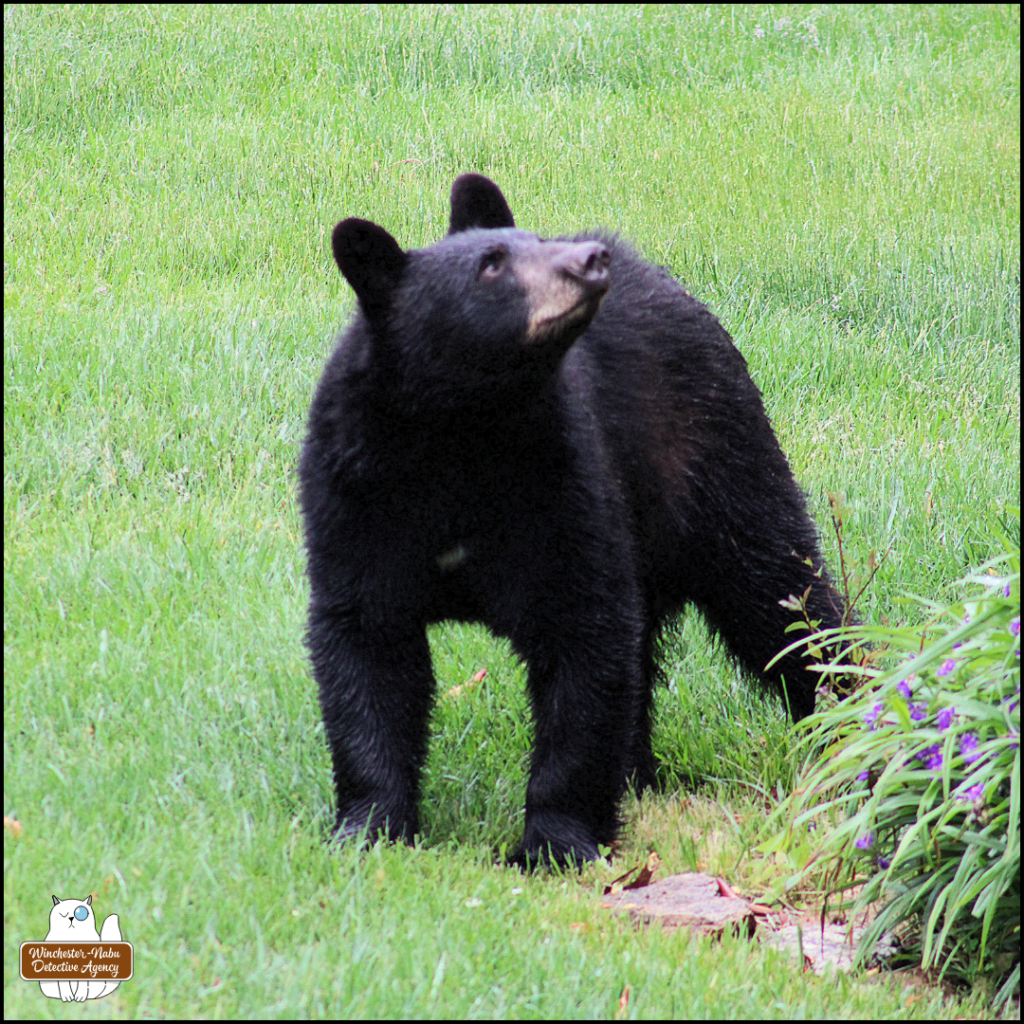
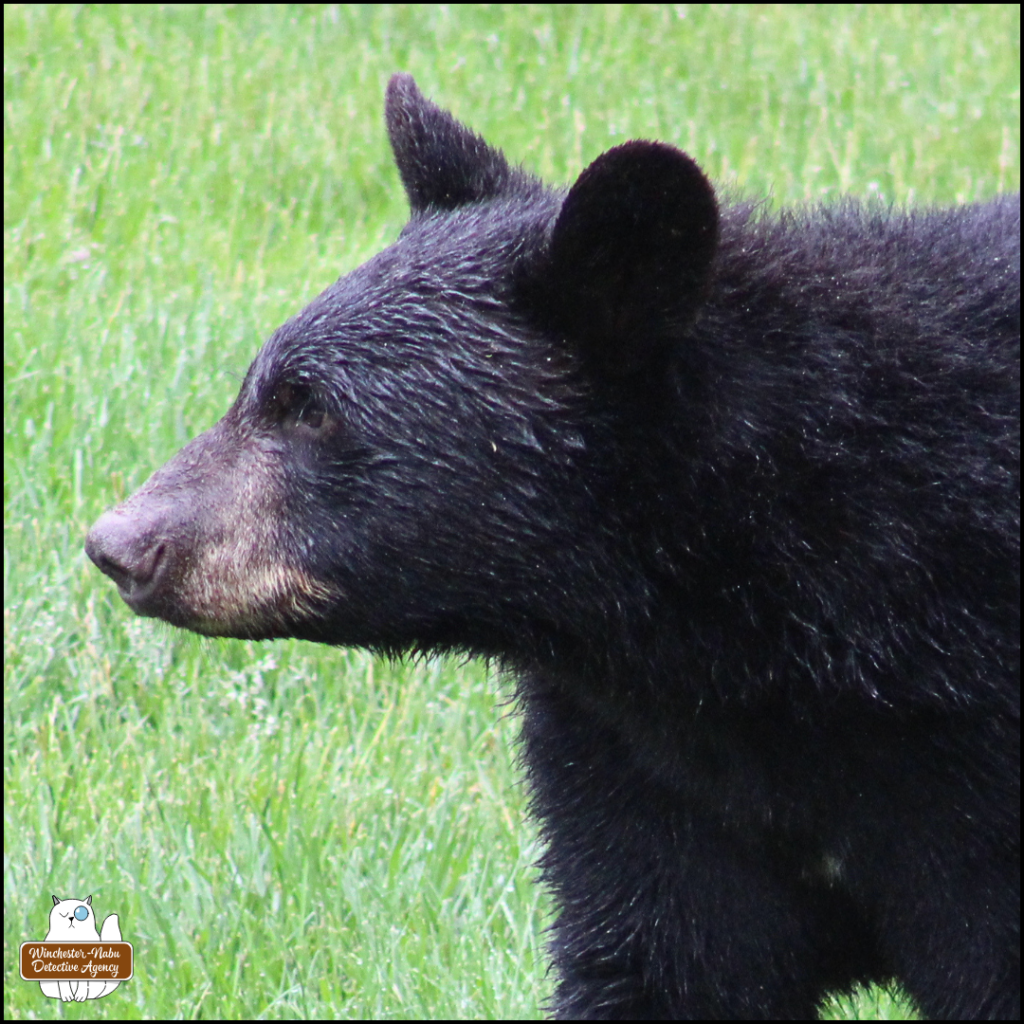
Over time, I set up trail cameras and got to see these creatures even better. I photograph them myself when I get the good fortune of one coming out during the day when I can move fast enough to grab the camera, find an angle, and hope I get one shot that isn’t a black blur against green grass. Sometimes I get lucky.